Phone: (IN) +91 80035 33335 (USA) +1 720 800 8859 Email: info@bimpactdesigns.com

Phone: (USA) +1 91733 86649, (IN) +91 80035 33335 Email: info@bimpactdesigns.comAssociate company of Dhanuka Group Venture – Since 2002
Phone: (IN) +91 80035 33335 (USA) +1 720 800 8859 Email: info@bimpactdesigns.com
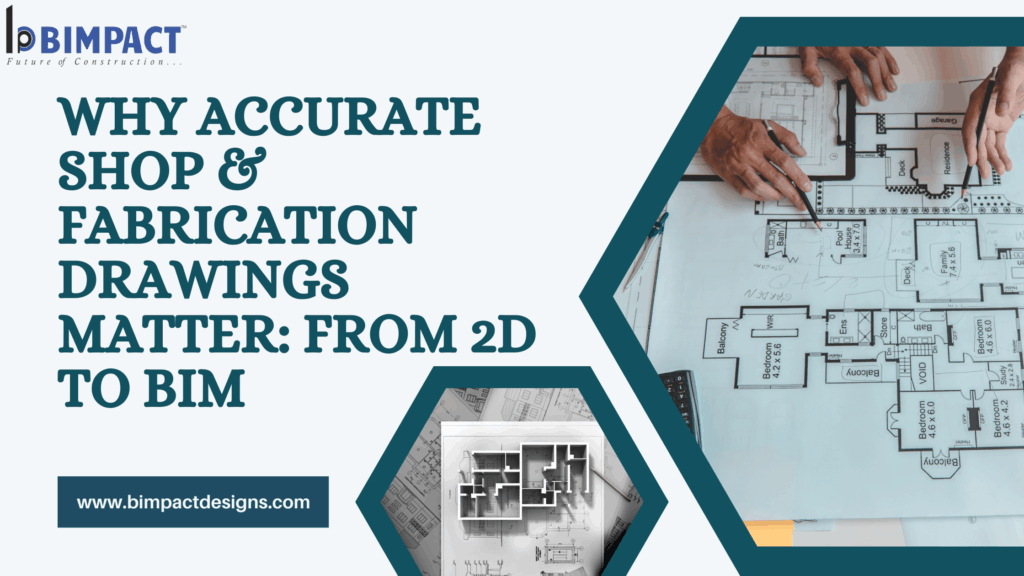
In construction and manufacturing, the leap from design to execution is only as strong as the details that bridge it. Shop and fabrication drawings are that bridge—turning conceptual ideas into actionable instructions for teams in the field. Whether you’re working with traditional 2D drawings or embracing the power of Building Information Modeling (BIM), accuracy in these documents directly impacts project timelines, costs, and overall success.
Shop and fabrication drawings go beyond the architect’s or engineer’s intent. They translate design concepts into highly detailed plans that fabricators, installers, and contractors can follow with confidence. Think of them as the project’s “instruction manual,” specifying dimensions, materials, connections, and processes needed to bring a design to life.
When these drawings lack accuracy or clarity, the result is often rework, delays, and cost overruns. On the other hand, precise and coordinated drawings help every stakeholder—designers, contractors, fabricators, and owners—work more efficiently and reduce risk.
For decades, 2D shop drawings were the industry standard. While they still hold value, they often leave room for misinterpretation, especially in complex projects involving multiple trades. Enter BIM.
BIM-enabled shop drawings offer a 3D, data-rich environment that allows stakeholders to visualize every detail of a project before fabrication begins. The advantages include:
By transitioning from 2D to BIM-driven shop drawings, teams can achieve better predictability, fewer errors, and smoother handoffs.
Accurate shop and fabrication drawings don’t just benefit the design team—they have ripple effects throughout the project lifecycle:
Ultimately, precision at this stage reduces risk for everyone involved.
The industry is moving toward smarter, more integrated workflows—and accurate shop and fabrication drawings are at the heart of that shift. Whether using traditional 2D methods or advanced BIM processes, investing in accuracy pays dividends across the entire project lifecycle.
By bridging the gap between design and field execution, these drawings ensure that vision becomes reality—with fewer obstacles along the way.