Phone: (IN) +91 80035 33335 (USA) +1 720 800 8859 Email: info@bimpactdesigns.com

Phone: (USA) +1 91733 86649, (IN) +91 80035 33335 Email: info@bimpactdesigns.comAssociate company of Dhanuka Group Venture – Since 2002
Phone: (IN) +91 80035 33335 (USA) +1 720 800 8859 Email: info@bimpactdesigns.com
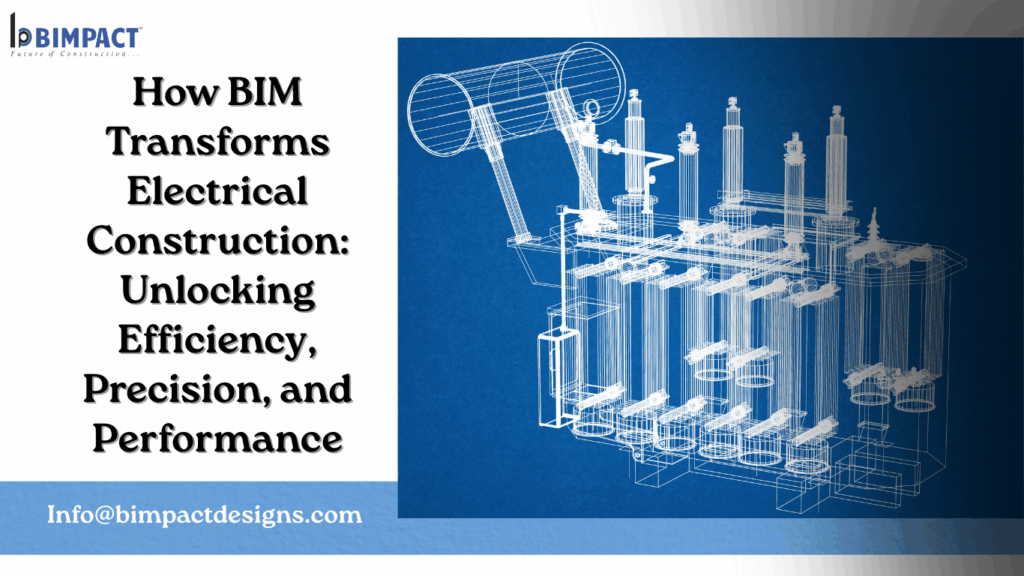
In today’s dynamic construction environment, leveraging cutting-edge technologies is critical for delivering projects on time, within budget, and to the highest standards of quality. Among these technologies, Building Information Modeling (BIM) stands out as a game-changer for electrical construction. BIM offers a transformative approach that improves collaboration, boosts accuracy, and drives smarter decision-making across all project stages—from design through to facilities management.
BIM fosters a collaborative project culture by establishing a shared digital environment where architects, engineers, contractors, and subcontractors coordinate seamlessly. A centralized BIM model functions as the single source of truth, offering real-time updates and minimizing information silos. This transparency ensures better communication, reducing misunderstandings and preventing costly mistakes.
Advanced BIM software enables the creation of highly precise 3D models of electrical systems. Detailed visualizations help stakeholders clearly interpret the design intent, easily identify potential issues, and suggest improvements before construction begins. These accurate models support informed decision-making, minimize rework, and keep projects on track.
One of BIM’s critical strengths is its clash detection capability. By simulating electrical systems within the overall building context, BIM can reveal conflicts with architectural, structural, or mechanical elements early in the design phase. This proactive approach aids in resolving issues before they escalate, saving both time and money down the road.
BIM empowers professionals with powerful tools for quantity takeoff, budgeting, and scheduling. More accurate cost estimates and resource allocation optimize project timelines. Reducing change orders, rework, and delays directly translates to significant savings and increased project profitability.
With detailed and data-rich BIM models, teams can plan and execute the prefabrication of electrical components with precision. This shift towards off-site construction means less on-site labor, speedier assembly, fewer errors, and improved overall efficiency. BIM-driven prefabrication supports lean construction practices that are both cost-effective and sustainable.
The value of BIM continues after construction. Integrating as-built information and equipment data into a BIM model gives facility managers an invaluable tool for ongoing maintenance, asset tracking, and operation planning. This digital “owner’s manual” streamlines maintenance activities and supports efficient long-term building management.
BIM’s analytical capabilities enable the simulation and optimization of energy use within electrical systems. Energy modeling tools integrated with BIM help identify efficiency opportunities, supporting sustainability goals and reducing the building’s carbon footprint.
BIM contributes to safer job sites by allowing virtual walkthroughs and risk assessments before physical work begins. Safety hazards can be visualized and addressed in advance, reducing the likelihood of incidents. BIM’s digital documentation also supports compliance with safety protocols throughout the facility’s lifecycle.
BIM organizes all regulatory, code, and material information in a centralized platform, making future inspections and audits easier and more reliable. Comprehensive digital documentation assures that electrical installations meet all legal requirements, reducing the risk of penalties and ensuring project delivery without setbacks.
BIM platforms facilitate the capture of lessons learned and performance data, providing a knowledge base for future projects. This promotes continuous improvement, fosters innovation, and ensures best practices are shared across teams and project portfolios.
Embracing BIM puts electrical construction teams at a distinct advantage—driving greater efficiency, precision, and value across every project phase. As the industry continues to evolve, BIM is not just a tool, but the foundation for the future of smart, resilient, and high-performing buildings.